
 Blog
Prestigious national or international awards (recognition within the field, nationally or internationally, is essential)
EB-1(A) Extraordinary Ability
EB-1(A) Extraordinary Ability Overview
The core of the employment-based first preference (EB-1) category: a green card program for top-tier individuals with national or international acclaim in the sciences, arts, education, business, or athletics
Employer sponsorship and the labor certification (PERM) process are fully waived, so you can petition without an employer
The goal is to prove that you are among the very top of your field ("one of that small percentage")
Takes priority over NIW (EB-2), so when visas are available it is the fastest route to a green card (*Current: continuously since 2000)
Eligible Fields and Evidence
| Field | Key Evidence (10 Criteria) | Examples of Detailed Evidence |
|---|---|---|
| Academia/Research | Awards, memberships, judging, publications | Awards on the level of the Nobel or Pulitzer Prize, reviewer roles for major journals |
| Arts/Athletics | Exhibitions, commercial success, media coverage | International awards, global exhibitions/performances, album/ticket sales, interviews in major daily newspapers |
| Business | High salary, leading role, original contributions | Proof of C-level executive status, revenue from commercialized patents, salary in the top 1% of the industry |
The 10 EB-1A Criteria in Detail
Membership in associations that require outstanding achievements for admission
Coverage of you and your achievements in major media
Judging the work of other experts in the same field (reviewing papers, serving as a competition judge, etc.)
Original contributions of major significance to the field
Your articles or books published in professional journals or major media
Display of your work at international art exhibitions or showcases
A leading or critical role at a distinguished organization
A salary or remuneration significantly higher than others in the same industry
Commercial success demonstrated by figures in fields such as the performing arts
※ Types of Evidence
Project materials, patents, sales records from commercialization or productization, media coverage, appointments by major academic and professional organizations, awards, and more
Review Criteria
An Extremely High Bar for Approval
If NIW looks at promise, EB-1A requires proof that you are at the very top of your field
Intent to Continue Working in the Field
You must prove that you will continue working in your field after entering the United States
Totality of the Evidence (Final Merits Determination)
After at least 3 regulatory criteria are met, USCIS makes a final determination, considering your entire career, achievements, and evidence as a whole, of whether you have sustained national or international acclaim and are among the very top talent in the field
EB-1A Case Law Change (Kazarian Decision)
The most important standard in EB-1A review is the "two-step review" established by Kazarian v. USCIS
STEP 1 Objective Test
Has the applicant met at least 3 of the 10 criteria on a quantitative basis?
STEP 2 Final Merits Determination
After passing Step 1, when all submitted evidence is considered as a whole, can the applicant be regarded as having extraordinary ability in the field?
A Strategic Approach
Rather than simply listing documents, the key is a strategy that persuades the officer by logically connecting the applicant's achievements to their broader impact
Application Process
STEP 1 Prepare the Petition
Prepare the application and supporting evidence (about 3–4 months on average)
STEP 2 USCIS
File the I-140 petition (a priority date is assigned); average processing time is 27-29 months *15 days with premium processing
STEP 3 NVC (National Visa Center)
Transfer to the National Visa Center and submission of immigrant visa documents
STEP 4 Wait for the Embassy Interview
An average wait of about 8–16 months; the interview is scheduled and preparations such as the immigration medical exam are completed
STEP 5 Obtain the Immigrant Visa
The immigrant visa is issued after the U.S. Embassy interview
STEP 6 Enter the United States
Enter the United States within the validity period of the immigrant visa
*The process above is based on consular processing, in which the immigrant visa is issued abroad. If adjustment of status is available within the United States, the green card process can proceed through Form I-485.
Approval Cases
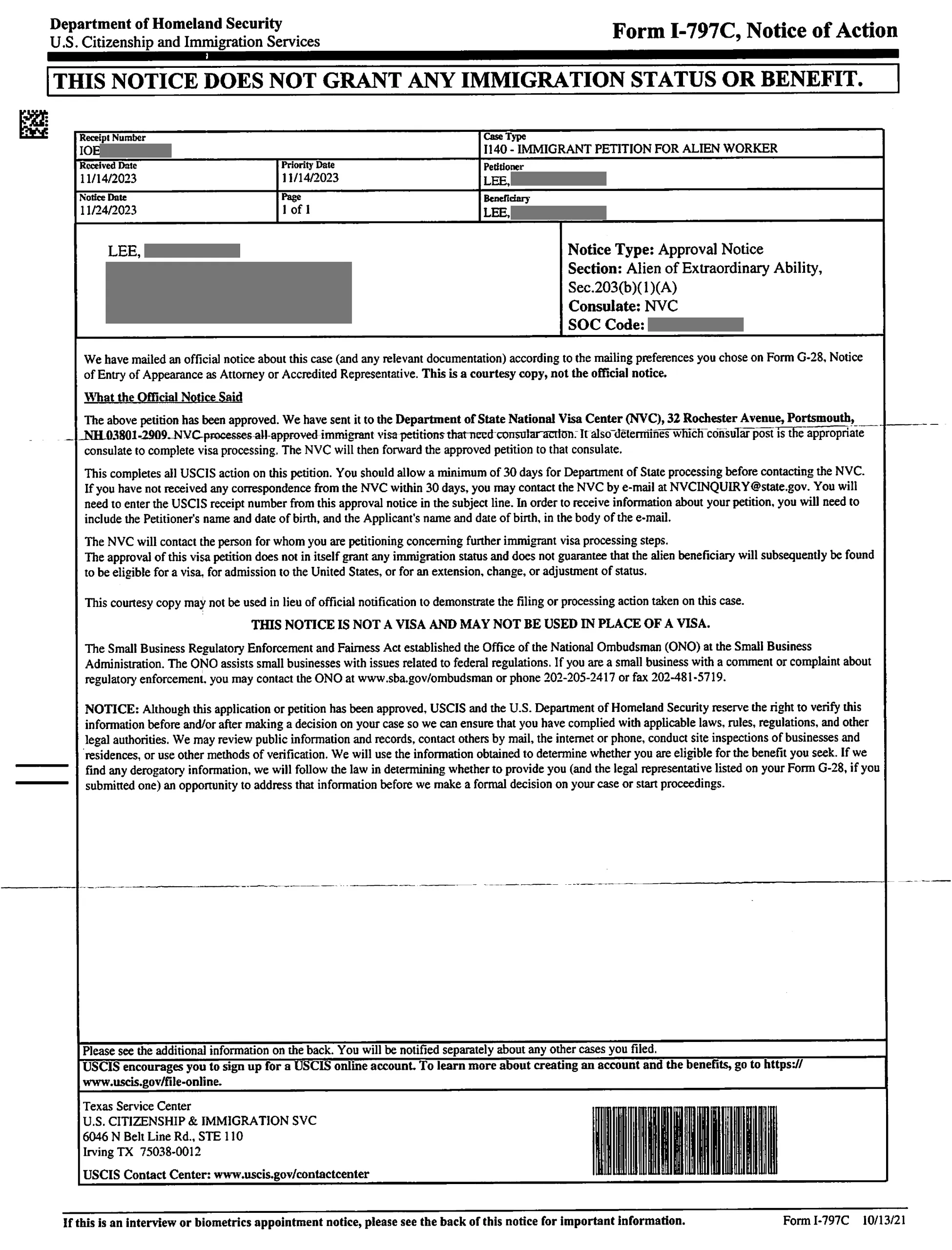 Professional Go player
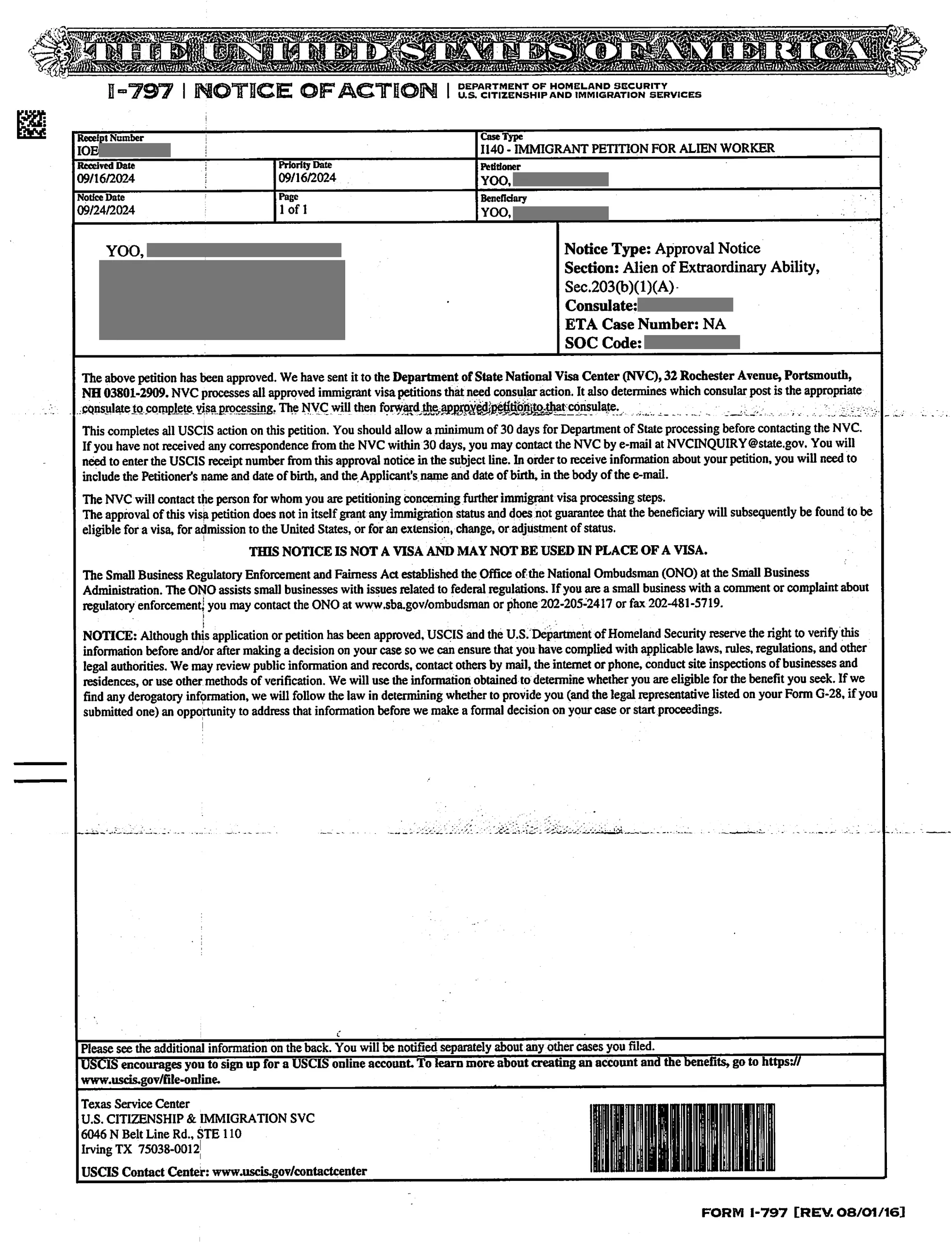 PR director
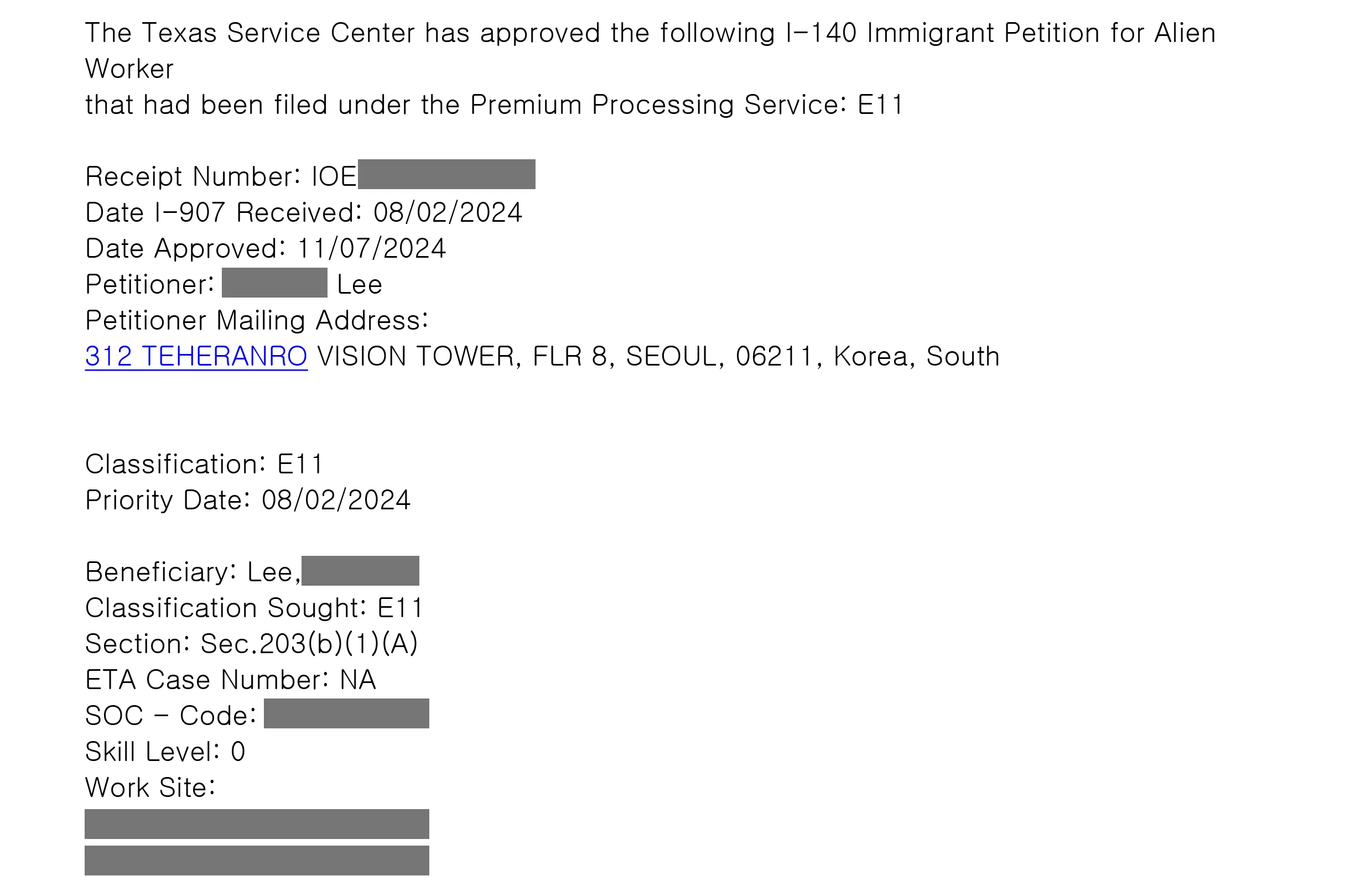 Professor of pulmonology
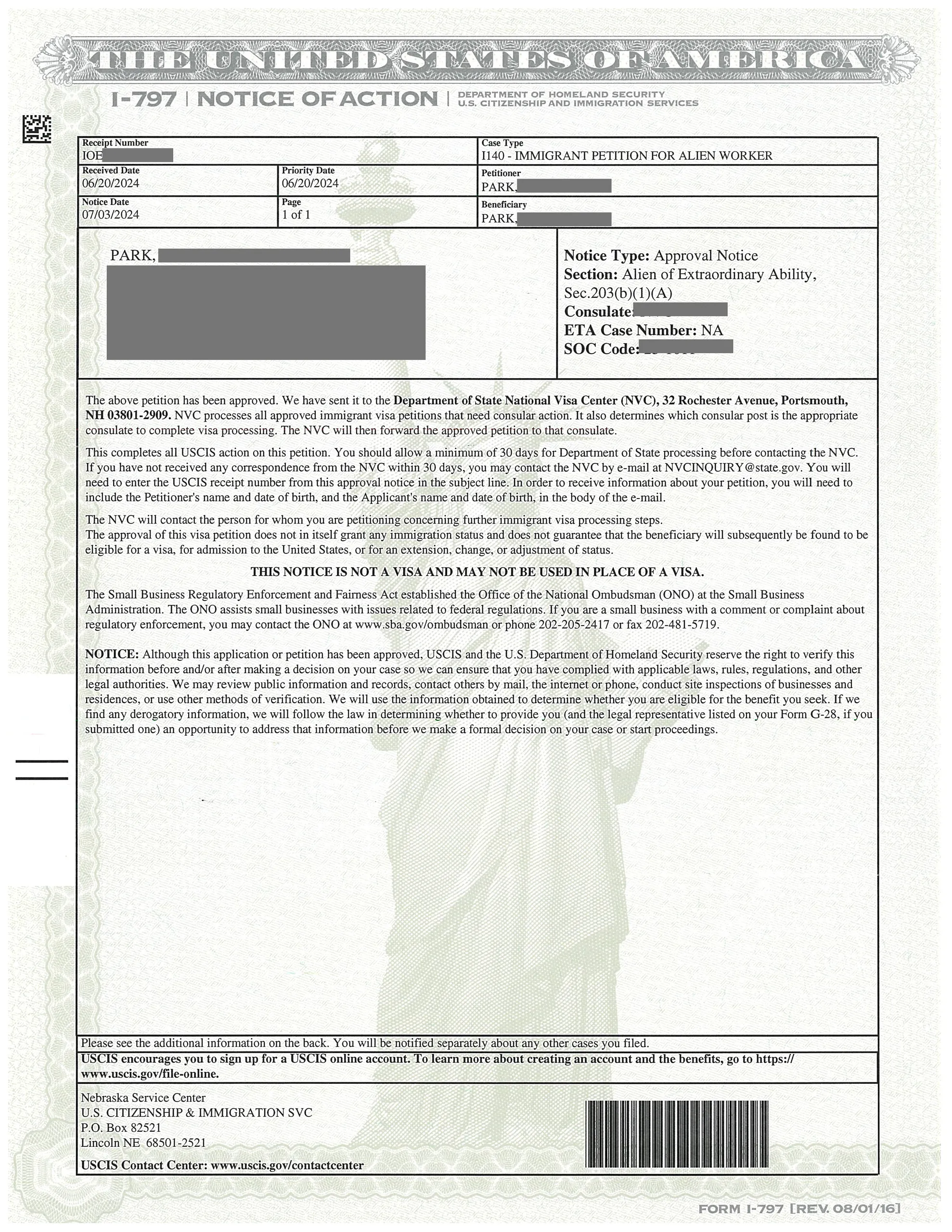 Professor of business administration
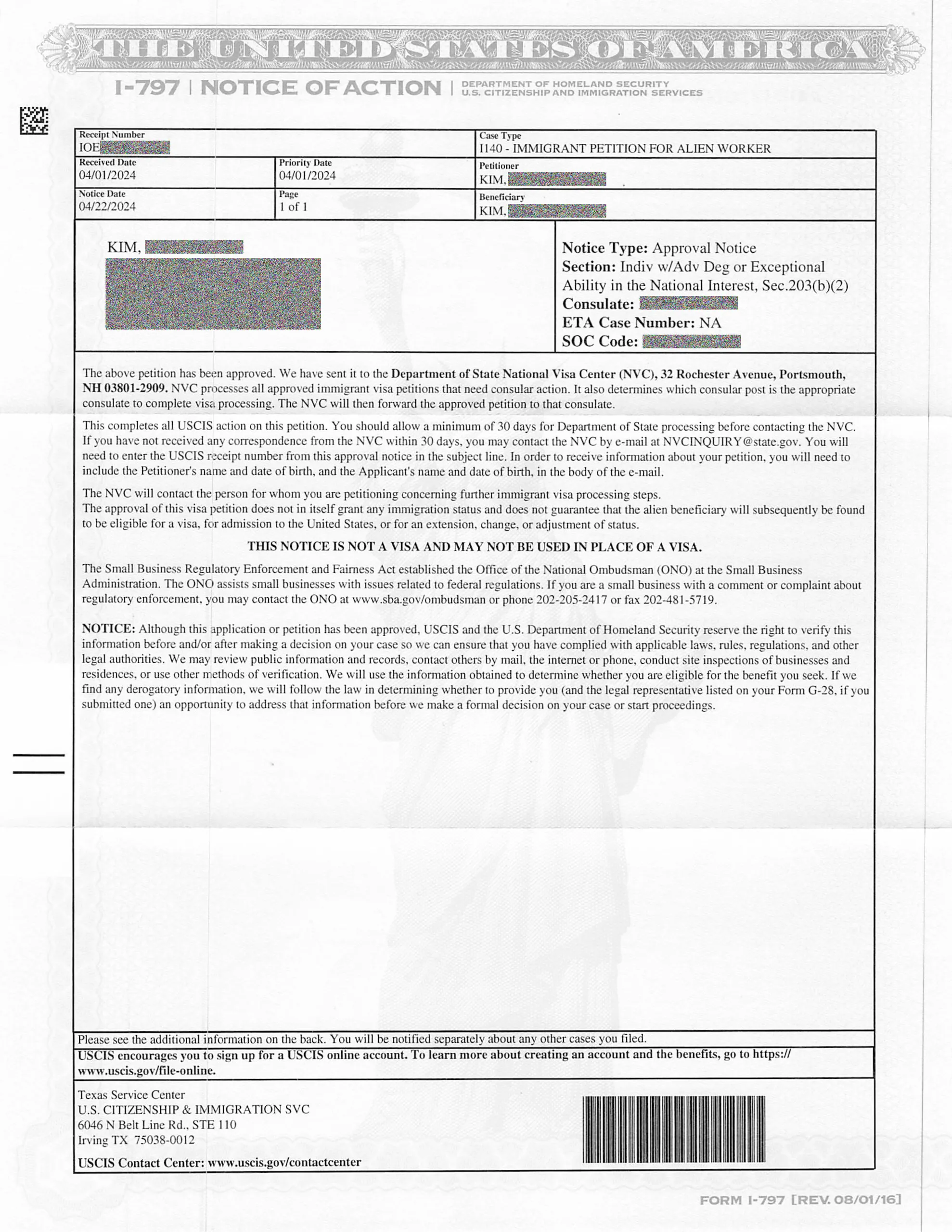 Professor of food and nutrition
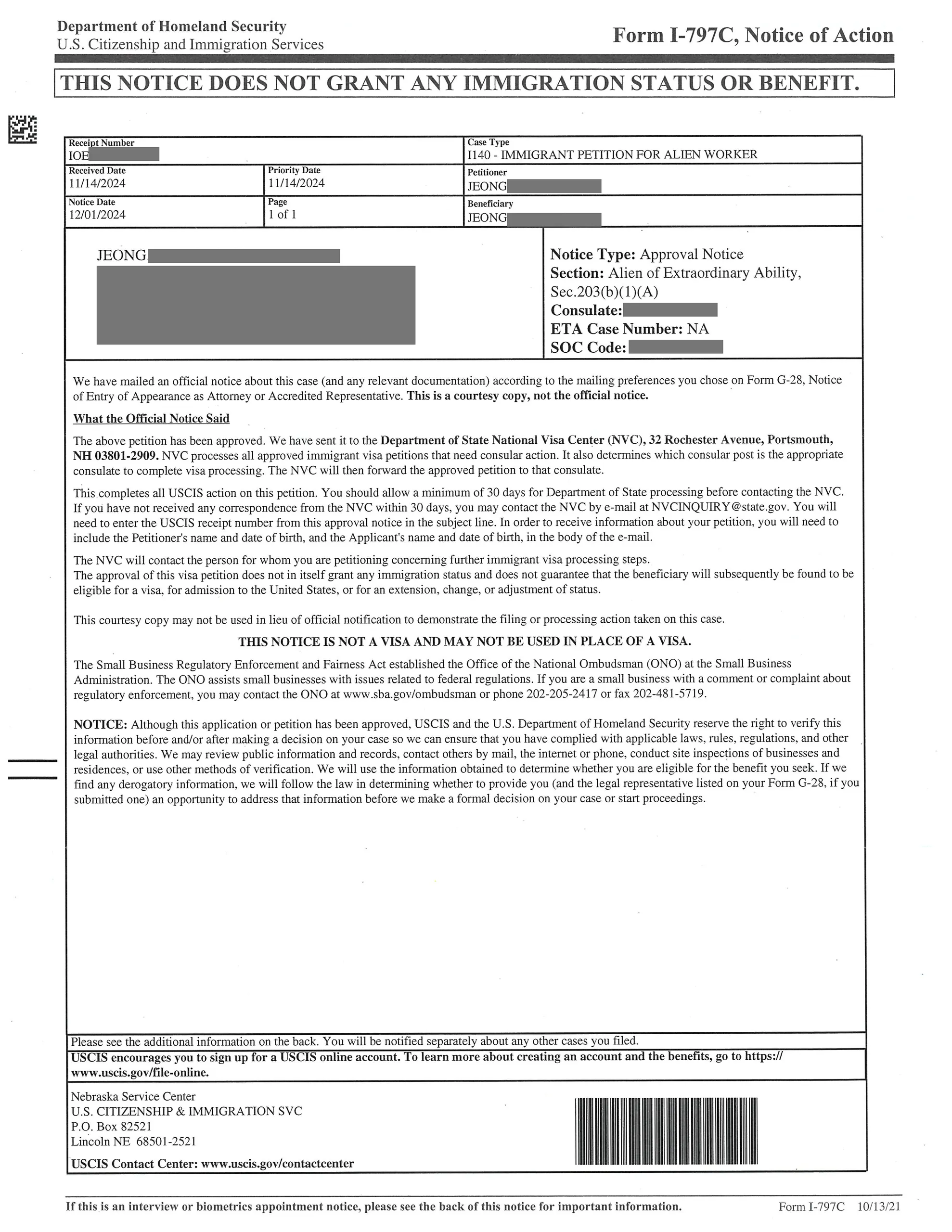 Professor of disaster prevention
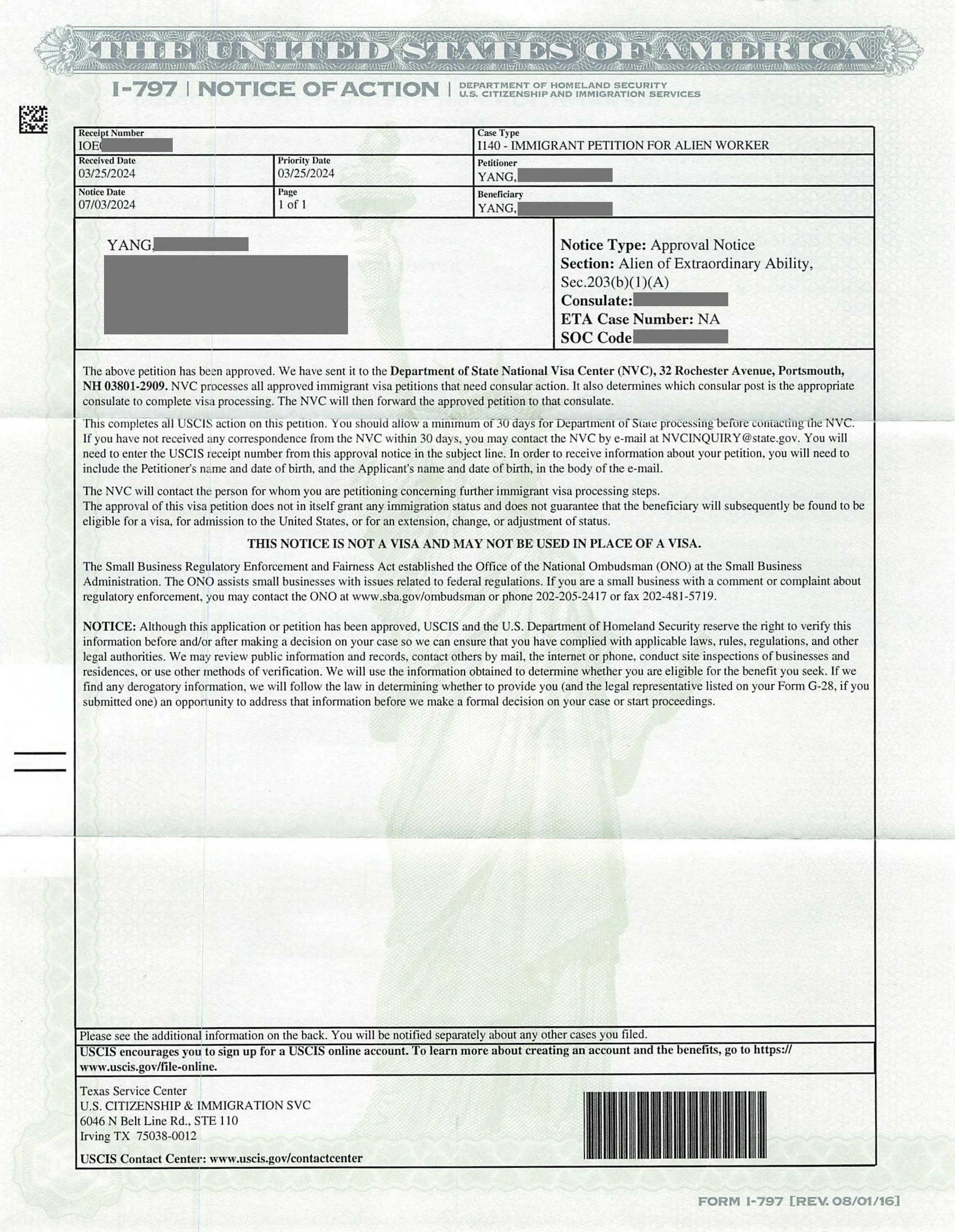 Basketball coach
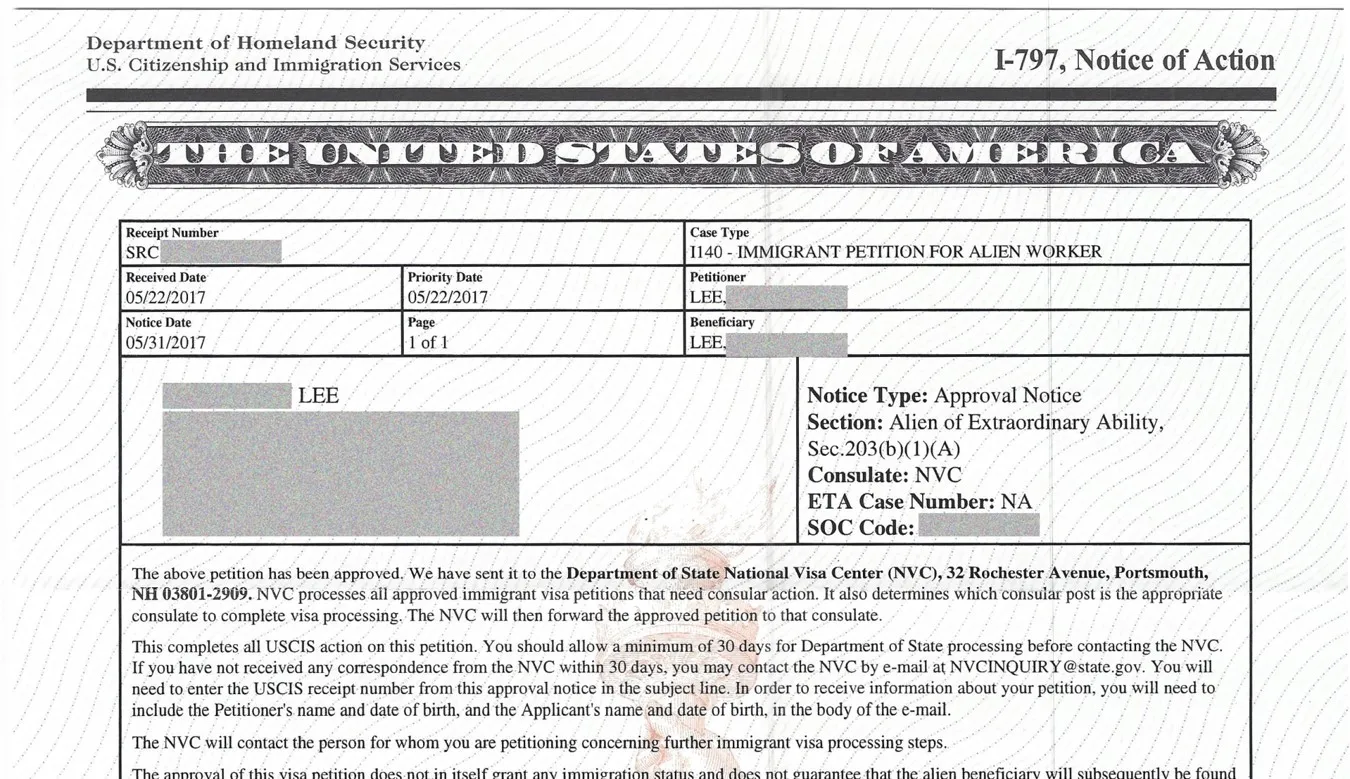 Ballet dancer
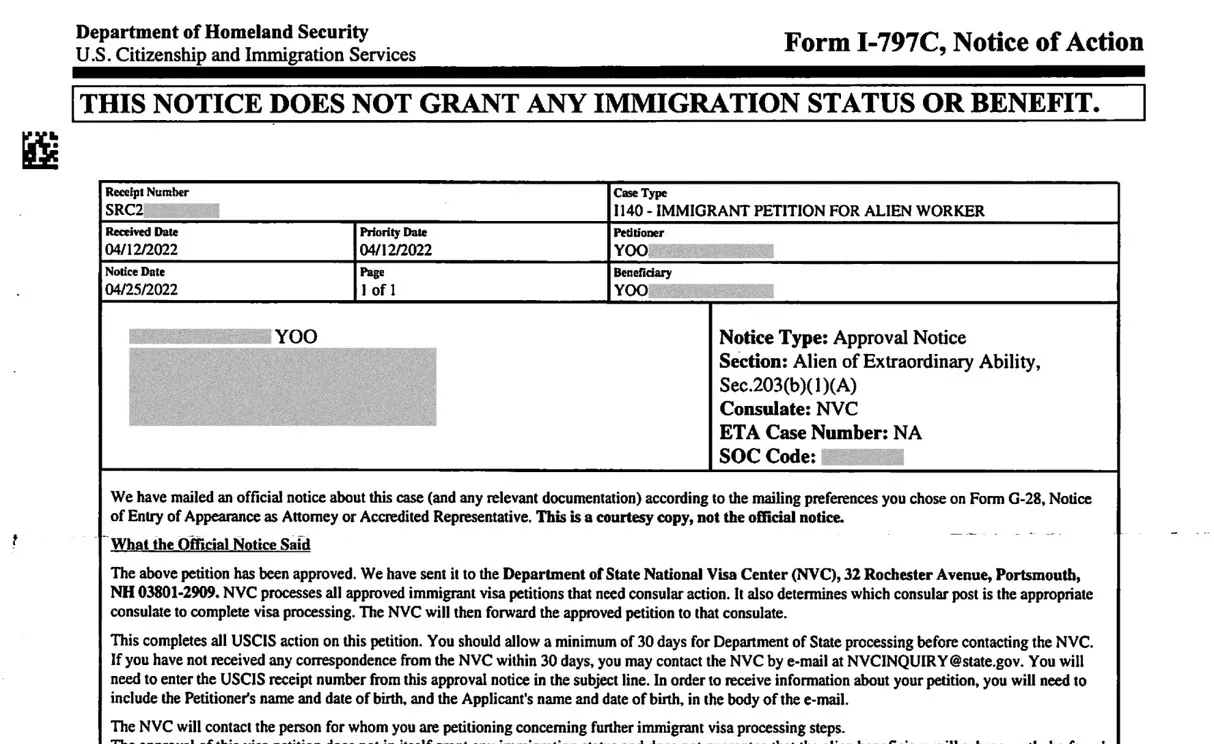 Professor of hepatobiliary and pancreatic medicine
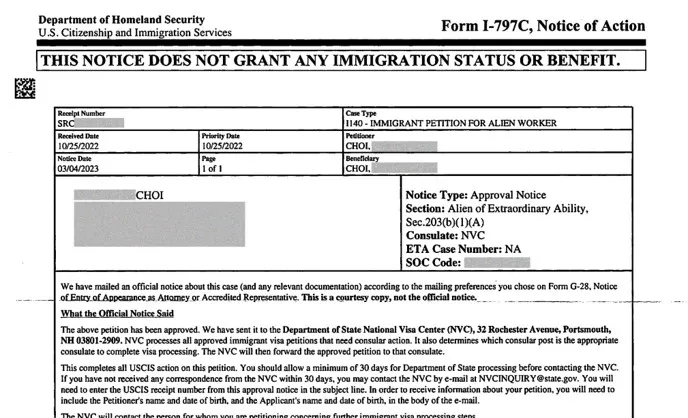 Internist
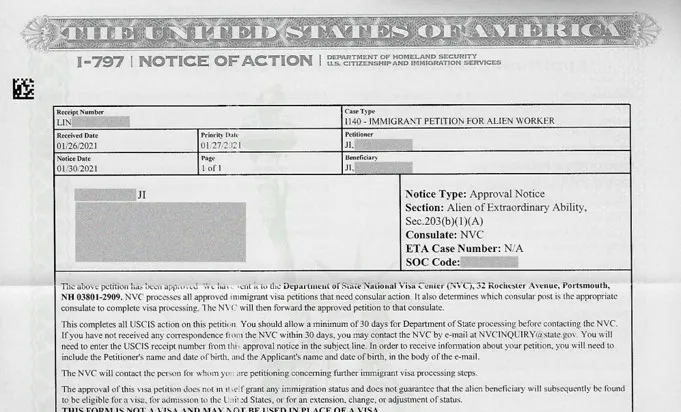 Orthopedic surgery
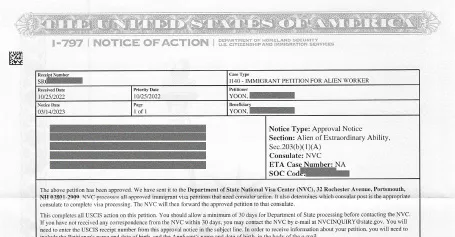 Internist